Saturday, January 30, 2016

E-Lit in Week 4: Revenge and Herself

This week in class, two pieces of electronic literature that caught my attention were Mr. Plimpton's Revenge and Pieces of Herself.  Mr. Plimpton's Revenge caught my eye simply because it was a story told entirely on Google Maps.  I thought this story and the concept were interesting because I have never seen anything like it before.  It made me realize that people can use almost anything technological and manipulate it into almost anything they want.  Personally, I think that Google Maps stories are more intriguing because the reader is able to grasp an accurate image of a specific location within the story.                                                                                              
Pieces of Herself was another story that caught my eye mainly because of how different it really was to most of the other electronic literature pieces I have seen.  The story has interactive scenes in which the reader takes objects on the screen and drags them to a silhouette to let the story unfold.  I found it interesting how each piece in the story came with it's own "thing" whether it be a woman being interviewed or a passage from something else.  These two stories stuck out to me the most because they were different from the rest of the electronic literature pieces that I have seen and interacted with previously.
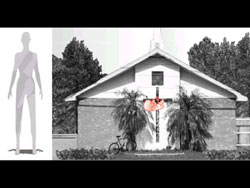
Reaction to e-lit thus far: Public Secrets

Public Secrets is a piece of electronic literature that really stuck out to me the most so far.  I enjoyed this story a lot because it really took us (the reader) right inside of a facility for female criminals and let us hear their stories.  This story also displayed information that proved how the prison system is corrupt and often times inhumane.  It was an eye opener in my opinion; to hear the stories of some of the women incarcerated.  With many of them, I felt bad and had sympathy with some of the stories of how some of these women ended up in prison.  One quote that really stuck out to me was "You can always remember a point where somebody said 'I need help,' and they didn't get it."  I thought this quote by itself spoke for many of the women in this institution.  These women often needed help in situations where help was clearly needed and they did not receive any.  Many of the women that were sent to this facility are good people, I believe.  I believe this because a vast amount of the women interviewed described their situations in life right before they were locked up and a lot of them seemed to have it tough enough already and did not really have a chance in the real world.  However, the readers only hear one side of each story so it makes it hard to tell.  Overall, I think this piece was my favorite because not only was it an eye opener, but the information was presented in an interesting and critical way.                                           

Friday, January 29, 2016

What is Digital Humanities?

Digital Humanities is using technology in order to better understand and learn new concepts and ideas.  It is taking technology such as computers and using them to acquire different data.  Digital Humanities gives the researcher more ways to learn and a broader range of information to research.  Digital Humanities matter because we live in a world where technology runs almost everything.  Technology is extremely important in the modern world and it’s important that we keep up with it as well.

Sunday, January 24, 2016

The Injustice of Restriction: My Reaction to Public Secrets


 During the year of 1993, the California Department of Corrections banned all media from its facilities.  This was a product of hardship and turmoil that the department had been under due to the media.  Their dark and dirty secrets were escaping to the public, and the public was not happy.  Instead of making improvements, the department closed its doors on all media which left the inmates without a voice and the public blind.  In Public Secrets, Sharon Daniel, gives a select group of these inmates a chance to speak out about their experiences.  Sam, a prisoner in the Central California Women's’ Facility, expressed her thoughts on the facility with this quote. “This is not a correctional facility, it’s a penal colony.”  This is one of many quotes that illustrate the lack of improvement in the correctional facilities.   Instead of serving time in facility where one could have a view of the outside world, whether it be from family or media, the prisoners view it as a “penal colony” exiled from the rest of the world.  The website supplies a great deal of other stories such as one about a woman dying because she was not given proper medical care or one that deals with women being randomly strip searched without probable cause.  Public Secrets shows the constant violation of rights that those women should be entitled to.  One might say that they deserve what is happening to them because they are criminals, but even prisoners have rights.  Just imagine that you had a family member facing these cruelties.  Many of the stories seem like cruel and unusual punishment which is prohibited under the Constitution, but no one is supposed to know about it.  The media should not be banned or restricted from the correctional facilities or prisons in the United States.  The media would hold the facilities accountable, and instead of taking the easy way out, the departments and facilities will be forced to make necessary improvements.

Tuesday, January 19, 2016

The Definition of Digital Humanities

Grant Climie

In the world around us, technology is advancing and expanding to the point where we might miss something if we blink.  As technology is furthered, the study of how it effects us as humans continues to progress as well.  Digital Humanities can be defined as "a field of study, research, teaching, and invention" that focuses on how computers and technology are effecting the humanities of today's world. It may also be defined as "building and experimenting with digital technology" by using "digital methods and tools."

Friday, January 15, 2016

Branden Jackson

    What do i think digital humanities is? I believe that digital humanities is a huge collaboration of digital resources that people could use. Humanities is broken down into various categories. For example, history, foreign language, and art to say the least. And with these categories various people could learn from them. Digitally, this makes it a lot more easier to most because more people can have access to it and continue to build on whatever it may be. As a whole digital humanities gives us more of a technological type of view and lets us understand stand  literature and culture.
Cara Finoli
What is/are Digital Humanities?
Digital humanities is the study of human culture through technology, such as archival/database, scholarship/research, and making/creating digital art and objects. It is the analysis of the literature portion of humanities in multimedia and social media on computers and smartphones. it is literature that is meant to be read on a computer. It is the writing, publishing, and reading of literature in electronic media.

Meaning of Digital Humanities

Peter Kipin


Meaning of Digital Humanities


“Digital Humanities can be described as a diverse and still emerging field that encompasses the practice of humanities research in and through information technology.” To me, digital humanities is a way that people are able to share ideas with one another, while at the same time being able to analyze the use of new technologies that emerge throughout the world every day. With digital humanities, we are able to access archives and databases that allow us to research various topics. I feel as though digital humanities gives everyone the same ability to discover new things, and share their own personal ideas with everyone using the internet.